
Looming Thoughts: A Weaving
Do what you will with the tattered rags of my poorly woven thoughts.

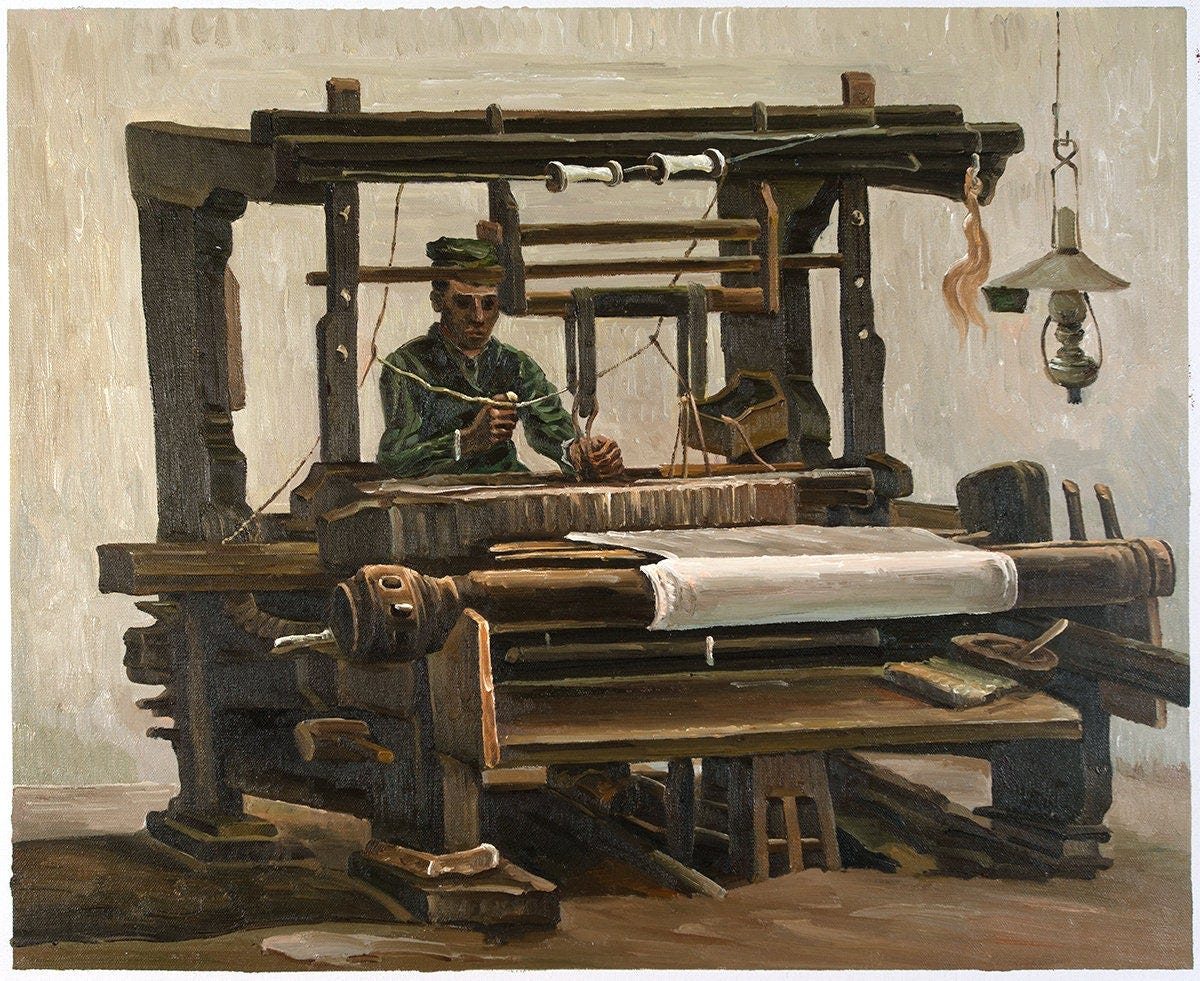
I’m not sure what will become of this article. My desire to expound upon and articulate explanations for thoughts I have is often tiresome work and doesn’t come easily to me. The following then is a gathering of thoughts inspired by varying sources that seem to me to be woven together. This is how I noted them down as is came to me:
Touch and the permission to touch, souls in contact, rain, precipitation, water crystals, the Germanic soul, the true love of the German, life that is felt, feeling (as per Klages quotes), again - touch, focus, still point amidst the vortex, whirlwind of life, steering the tornado, Klages and Dan winter, crystal rain forming, crystallizing phenomenon of Stendhal, asceticism patriarchy desertification barrenness, Valentin Tomberg, Christianity and the gift of tears
I’ll add some context, a little commentary perhaps, but then you’re on your own. Greater minds will do more with it than I can, anyhow.
Touch and the Permission to Touch
First, I was listening to a podcast with Dan Winter and he made the comment that “the permission to touch” is what allows water vapour to become a droplet. If you know anything of Dan Winter you know he is providing a humanness to a phenomenon of physics (though ultimately he is providing a physics to a phenomenon of humanness). Specifically, he elaborated, it is the electrical centripetal force that is also associated with human attention or focus.
Human attention or focus is simply another word for love or desire. It is easy enough to reflect and realise that if you attempt to concentrate on something for any prolonged period of time and with a certain strength of focus, it can be quite an arduous and frustrating task. If it is backed, however by love, desire, genuine interest, etc. you enter the state Valentin Tomberg calls concentration without effort. A state of active passivity, or passive activity … also perhaps known as Wu Wei or action through inaction. More recently popularized as “The Flow State.”
More on touch and focus. Though mystical experience is often associated with vision, less frequently perhaps with a hearing, it is most fitting when speaking of such things to speak of touch. All of the five physical senses are in fact a type of touch, so too in mystical experience one is touched by a larger reality.
The pure reflection of mystical experience is without image and without word. It is purely movement. Here consciousness is moved by the immediate contact with that which transcends it, with the trans-subjective. This experience is as certain as the experience belonging to the sense of touch in the physical world and is, at the same time, as much devoid of form, colour and sound as the sense of touch. … Spiritual touch (or intuition) is that which permits contact between our consciousness and the world of pure mystical experience. … Mysticism is the source and the root of all religion. Without it religion and the entire spiritual life of humanity would be only a code of laws regulating human thought and action. If God signifies for man something more than an abstract notion, it is thanks to spiritual touch or mysticism. - Valentin Tomberg
Souls in Contact
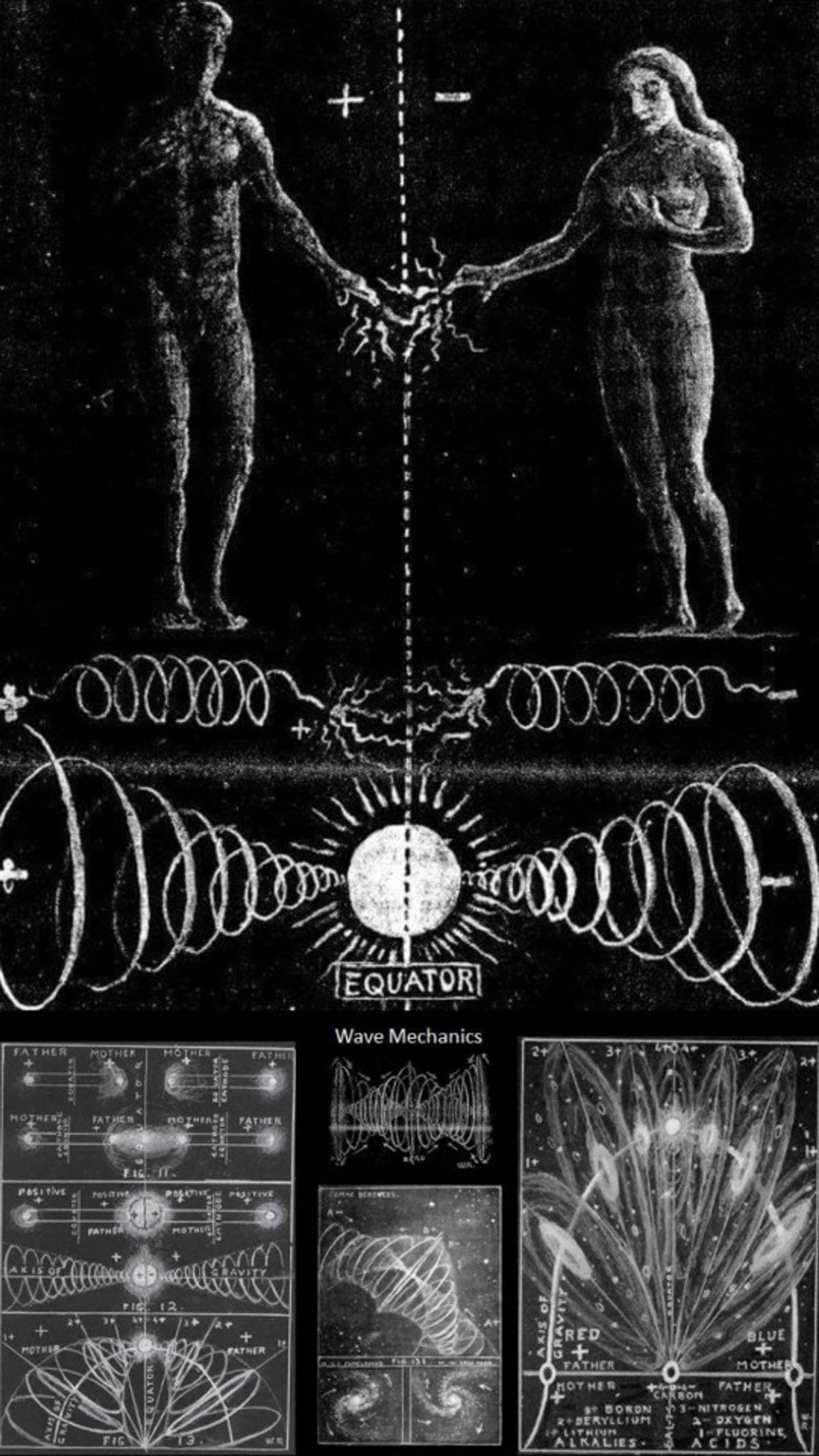
That place of touching becomes the focus point. The point of desire or love or interest between souls, between God and Man, Heaven and Earth; between the myriad polarities of reality.
This bliss state of focus or touch, Dan Winter says, is one where you “occupy the centre of the tornado,” ... he says humans can literally steer tornadoes and make rain. I’m certainly not going to discount it.
Ludwig Klages, Rain, Dream, Desire, Love
This all brought the following Ludwig Klages quotes to mind:
In the fall of rain we find the marriage of the telluric and sidereal elements.
Rain is the natural phenomenon, par excellence, of the ecstatic nature of the cosmos.
The Roman surrounded himself with walls, the German with falling rain and wind-blown trees: to them he sings, about them he thinks, and in their midst he dreams his inner dream.
The German (in contrast to the walled off Roman, here we can ponder the synonymy of being walled off, grasping the fruit, the grasping mind, conceptualizing the real etc.) whose life is one of “falling rain and wind-blown trees” is he who understands the true depths of love. Given my overwhelming German ancestry I’m happy to expound on this no further except for further quoting Klages:
Only those of Germanic blood can understand the true depths of love. … The Greeks understood the inwardness of love better than did the Romans; nevertheless, the Greeks imprisoned Eros within forms. Love, not as passion, but as the harmony pervading the entire being of two persons; love, as the deep joy in another; and love, as warmth of heart and complete and devoted intimacy: that kind of love is Germanic. In Germanic man also there appeared for the first time true tenderness, the marvelous third element issuing from Spirit and desire. Here is devotion without dissolution of the self, mildness without weakness, pity without cruelty.
Not passion, a state of lack, but harmony pervading. Not as a static state of petrified telos, but an eternally outpouring fulfillment. A becoming that is its own telos. A cosmic wave.
In the soul, the individual is not truly an individual, but a cosmic wave. The soul is able to bypass its bodily spiritual uniqueness, to go beyond, to become a whirlpool of universal life. Within the blood of those who are rich in soul-substance, atoms of fire circulate.
And my favourite Klages passage which I have used before and will again.
Life is not perceived, but it is felt [gefühlt] with a strength that obscures everything. And we need only reflect on this feeling to become aware, with a certainty beyond which there can be none more certain, of the reality of being alive [Lebendigseins]. Whether we judge, think, will or wish, dream, phantasize, all of these are sustained and shot through by one and the same torrent of an elementary feeling of life [Lebensgefühls], which can be compared to nothing, traced back to nothing, that cannot be thought through and analysed, and also of course never ‘understood. And because we feel ourselves as being alive, what is vital meets us in the image of the world. Expressed in a short formula: we experience our own life and, in it, we also experience the other life [das fremde Leben]. From this it follows that we can know about life exactly only insofar as we, ourselves alive, submerge sufficiently deeply into it in order to preserve and secure a recollection [Erinnerung] of it for waking consciousness.
Life is felt. Life is a touching.
To quote a much more obscure, lesser known and deeply misunderstood author:
We do well to remember also, that the person before us is poetry made flesh. That they are worlds unto themselves. And that worlds collide and intermingle and touch. That souls are porous and we are the poorer for not taking on the mind of the adventurer, the fool that takes the leap of faith, stepping out into the worlds around us, allowing those worlds to move through us, in wonder and awe and reverence. - HermetiCat
“That place of touching becomes the focus point. The point of desire or love or interest between souls, between God and Man, Heaven and Earth; between the myriad polarities of reality.”
Tears and Rapture
Now we come to tears. If rain is the marriage of the telluric and the sidereal then tears are the same, micro-cosmically speaking, for the man.
Klages:
Symbol of the highest rapture: the tear that bursts forth uncontrollably; the tear that ‘overflows’ the eye.
Symbol of highest rapture! And what is the highest rapture other than the touching of souls. The marriage of earth and heaven, the telluric and the sidereal. The Heiros Gamos of the polarity of life - is life.
Valentin Tomberg has this to say of tears:
Christian mysticism speaks also of the "gift of tears"— as a precious gift of divine grace. … Thus the outer characteristic of those who choose the other mystical way, that of the God of love, is that they have the "gift of tears". This is in keeping with the very essence of their mystical experience. Their union with the Divine is not the absorption of their being by Divine Being, but rather the experience of the breath of Divine Love, the illumination by Divine Love, and the warmth of Divine Love. The soul which receives this undergoes such a miraculous experience that it cries. In this mystical experience fire meets with FIRE, Then nothing is extinguished in the human personality but, on the contrary, everything is set ablaze. This is the experience of "legitimate twofoldness" or the union of two separate substances in one sole essence. The substances remain separate as long as they are bereft of that which is the most precious in all existence: free alliance in love. … And this is why all those who have chosen the way of depersonalisation are unable to cry and why they have dry eyes for ever. For it is the personality which cries and which alone is capable of the "gift of tears".
The fact that there are tears of sorrow, joy, admiration, compassion, tenderness, etc., signifies that tears are produced by the intensity of the inner life. They flow— whether inwardly or outwardly is not important —when the soul, moved by the spirit or by the outer world, experiences a higher degree of intensity in its inner life than is customary. The soul who cries is therefore more living, and therefore fresher and younger than when it does not cry.
Liquid Crystal Love, Sophianic Soul and Stendhal
There is something here of Stendhal’s crystallisation as well, though I’m not exactly sure how to articulate it. His conception of crystallisation is effectively a negative one, something of the purely fantastical that “crystallises” the object of desire in the mind through the flattering illusions of the person’s nascent interest. The object of desire then becomes a purely mental construct not seen for who they truly are.
We may use this opportunity though to introduce what has now been recognised as a fourth state of water. We know water in its crystallised form of ice and this would seem to be an appropriate representation of Stendhal’s concept, although his was a reference to the phenomenon of salt crystals forming upon twigs:
“In the salt mines, nearing the end of the winter season, the miners will throw a leafless wintry bough into one of the abandoned workings. Two or three months later, through the effects of the waters saturated with salt which soak the bough and then let it dry as they recede, the miners find it covered with a shining deposit of crystals. The tiniest twigs no bigger than a tom-tit’s claw are encrusted with an infinity of little crystals scintillating and dazzling.”
While Stendhal’s metaphor focuses on the beauty of the crystallised twig not being an accurate representation of its true form, which is the main point behind his concept of crystallization, we use the image of ice crystals to focus on the stagnant and solidified manner in which concepts freeze over in the mind, disallowing the constant flux of reality to be experienced as it is. This fourth state of water, though, called structured water or liquid crystal maintains the free-flowing state of water as liquid but is structured in a crystalline manner. The science of such things aside, which I do not have the brain for, this liquid crystal is the ideal image for the ungrasping mind, the soul that reaches out to touch but never grasp hold of. Again, the romanticized world according to Novalis, where one sees with crystal clear clarity the qualitative potency of the world, which is a phenomenological worldview that allows for the free-flowing nature of reality and does not seek to solidify it in a conceptual prison.
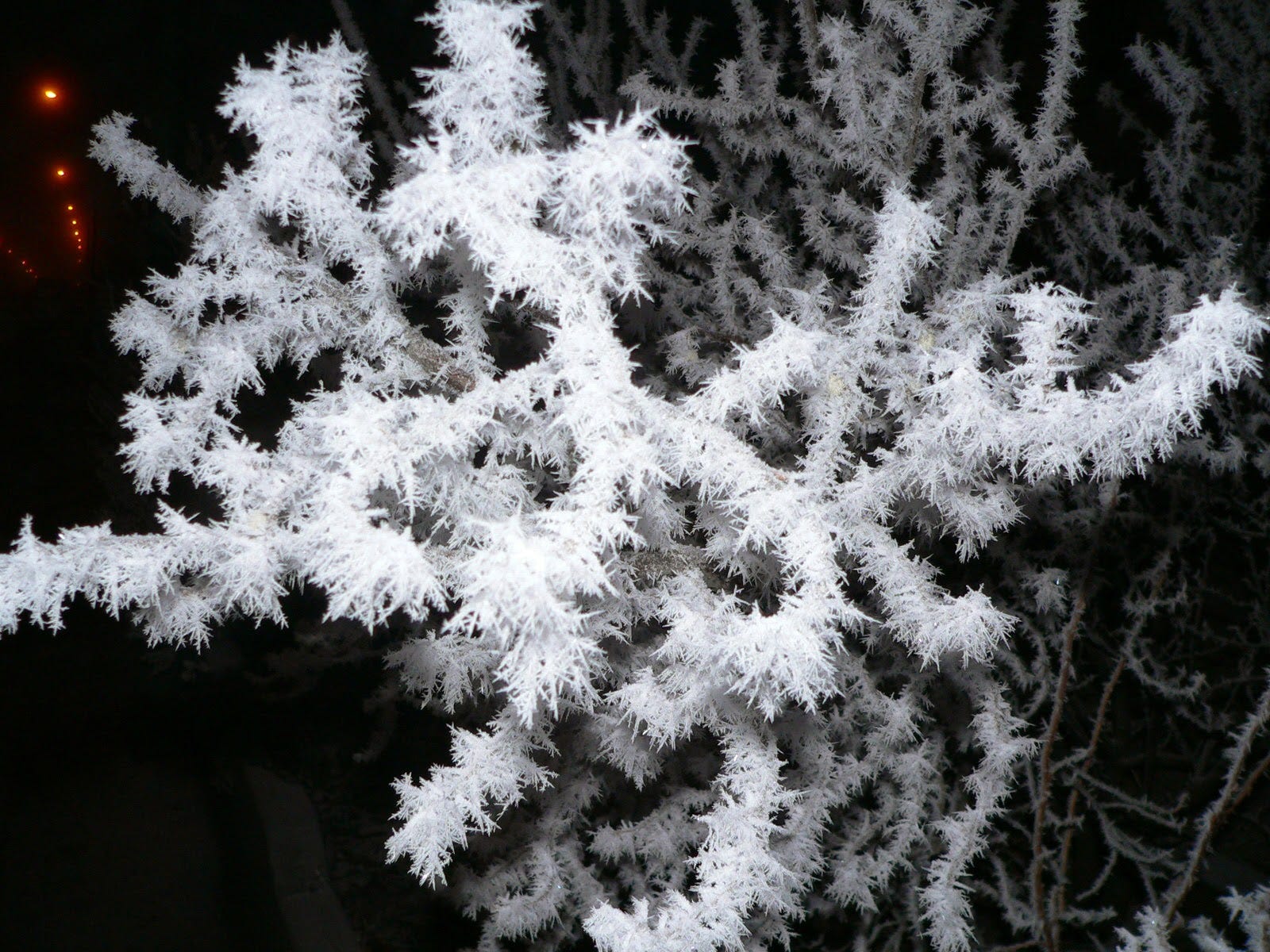
Perhaps this fourth state of water is one we may consider Sophianic, especially in relation to the usual “trinitarian” view of water being either solid, liquid or gas, where Sophia is seen as a sort of membrane between the heavens and the earth.
To re-imagine Stendhal’s crystallization then, we would find the love, desire, focused intent etc. discussed earlier, of the lover whose imaginings of the beloved are not mere frozen conceptualizations that entomb, they are now liquid crystal imaginings that grasp not, but see with clarity the qualitative potential of the beloved and inspire to the becoming of life, to unfolding.
When Dan Winter says that the focused intent of a human in the state of bliss or love can create rain, we may say that the imaginings of the wonder-filled soul in ecstatic union with the daemonic soul of cloud and sky will inspire to rapturous delight, naturally expressed by rain. Likewise, the human in response shall weep ecstatic tears of delight.
The man without tears suffers the same as the land without rain; desertification.
Men who give way easily to tears are good. I have nothing to do with those who hearts are dry and whose eyes are dry! - Johann Wolfgang Von Goethe
There is a connection here between the desert, of which Holy Writ will often say demons seem to restlessly dwell, asceticism and even patriarchy, though not necessarily in a completely negative sense. It is nuanced and here I will let the reader think on it at there own leisure. An interesting study mentioned by Winter was one where there was found a correlation between cultures that frown upon human touch and the desertification of their environment.
A Late Arriving and Final Thread of Thought
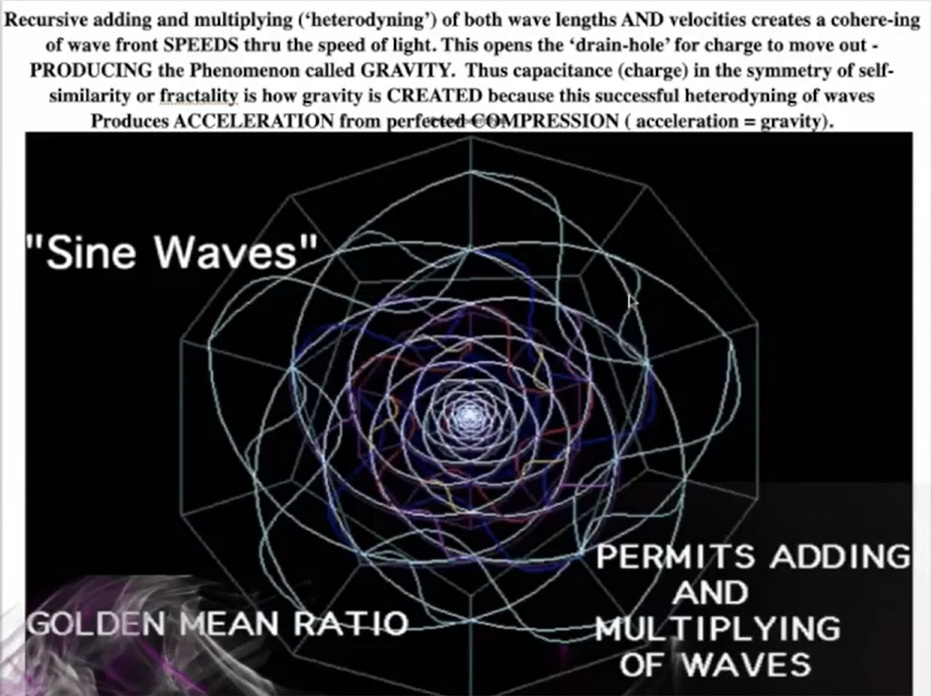
Something else that Dan Winter frequently mentions, and really belongs at the beginning of this article, is the arranging of the heart into a fractal rose. Again, whilst Mr. Winters insists there is very real physics involved in this, I wont pretend to fully comprehend it and instead will focus on the symbol involved. The heart and the rose have long been associated with each other. Particularly we see in the Christian tradition Luther’s Rose and the “Rose Cross” of the Rosicrucian’s. In both these symbols the rose is synonymous with the heart of Christ (of which all Christians should take on) in particular with his wounded heart, pierced by the spear of destiny, which signifies a precise focal point, a portal of “touch” between heaven and earth, which pours out grace without restraint as the flowering rose from its fulcrum point, and most especially as the heavenly fragrance (Klages has said that a flower’s scent is it’s soul!) that particularly “touches” the soul of man. That scent is so often a profound factor in the recollection of memory is something that must needs be pondered at ones own leisure. Christ says “do this in memory of me.” When the heart is touched by the scent of heaven and earth in union, the flowering rose of the wounded heart of Christ, and itself emits such fragrance, one shall re-member their divinity! Such a thing is surely salvation.
Enough for now!
“I need to be silent for a while, worlds are forming in my heart.”
- Meister Eckhart
This is so synchronous with my mystical experiences of late. Fascinating how that works.